

If your furnace or air conditioner won’t turn on — or isn’t heating or cooling properly — you might be dealing with a pressure switch issue. One of the most common questions we hear is:
“How do I test an HVAC low pressure switch?”
Before jumping to expensive repairs or replacement, the good news is you can often troubleshoot this issue yourself. Learning how to test an HVAC low pressure switch can help you quickly identify whether your system is working properly or if it’s time to call in a professional.
How to Test an HVAC Low Pressure Switch
To test an HVAC low pressure switch, turn off power to the system, disconnect the switch wires, and use an ohmmeter to check for continuity while applying pressure. If the switch does not close properly, it may need to be replaced.
A low pressure switch plays an important role in protecting your HVAC system. It monitors refrigerant pressure and prevents your system from running when levels are too low, which helps avoid serious damage.
If this switch isn’t working properly, your system may not turn on at all — or may shut down unexpectedly.
So, How Exactly Do You Test Hvac Low-Pressure Switches?
Step 1: Turn Off Power
First, turn off power to the unit by disconnecting it or switching off the breaker. This is important for safety before testing your HVAC low pressure switch.
Step 2: Remove the Switch Cover
Remove the low-pressure switch cover after that. You may easily remove it by unscrewing its central screw with a suitable screwdriver.
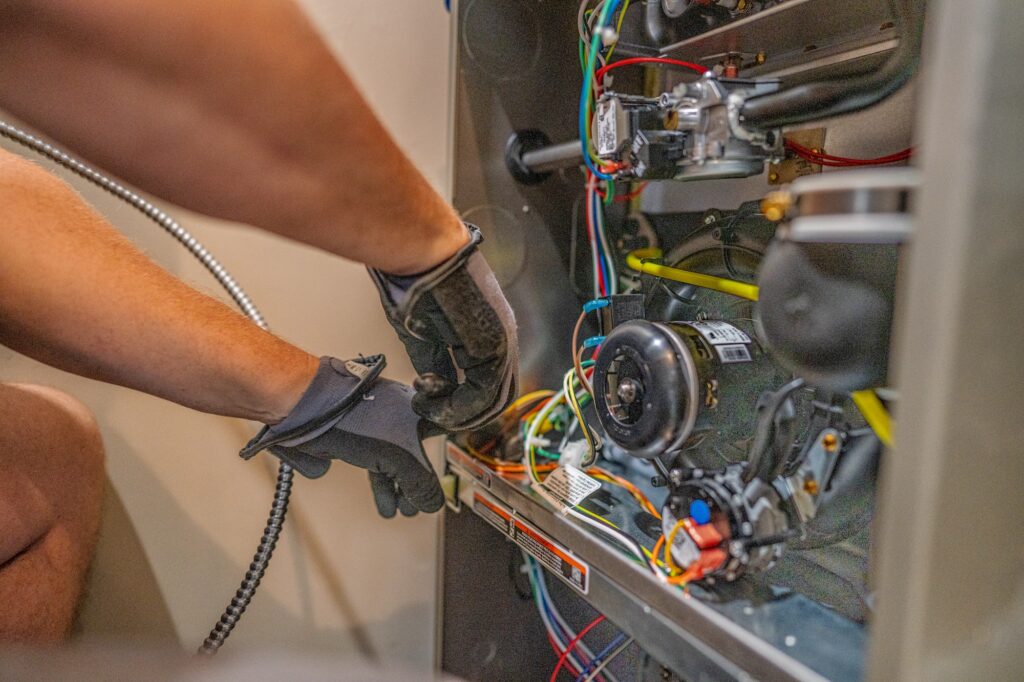
Step 3: Disconnect Wires
Separate the wires that connect the low-pressure switches to the terminal blocks and disconnect them immediately. Do you have any idea how you’ll distinguish these wires apart? These two wires are distinguished by their colors: blue or brown. Make sure you don’t disconnect the white and black cables, as they are the energy and power wires.
Step 4: Apply Air Pressure to the Switch
Apply air to an HVAC low-pressure switch with the air compressor.
Step 5: Test with an Ohmmeter
After that, take an ohmmeter lead and place it on one of the two exposed wires. Apply the other lead to the second exposed wire while applying atmospheric pressure to an HVAC low-pressure switch.
If the low-pressure switch closes when atmospheric pressure is applied, an ohmmeter will read ‘0.’ This indicates that the HVAC low-pressure switch is functioning properly.
Step 6: Adjust the Setpoint Screw if Needed
When applying atmospheric pressure to an HVAC low-pressure switch, turn the setpoint screw counter-clockwise.
If the pressure switch still won’t close, it’s likely that it’s broken or damaged and needs to be replaced right away.
You can also learn more about how often your furnace should cycle to better understand how your system is performing and help you avoid costly maintenance down the road. For any kind of part replacements, you can contact Martens Heating & Cooling at 920-315-6707 for a furnace repairman.
Frequently Asked Questions About HVAC Low Pressure Switches
What does a low pressure switch do in an HVAC system?
It monitors refrigerant pressure and helps protect your system from running when pressure is too low.
What happens if a low pressure switch fails?
Your system may not turn on or may shut down unexpectedly to prevent damage.
Can I test a low pressure switch myself?
Yes, with proper safety precautions and tools like an ohmmeter, but professional testing is recommended if you’re unsure.